The Present
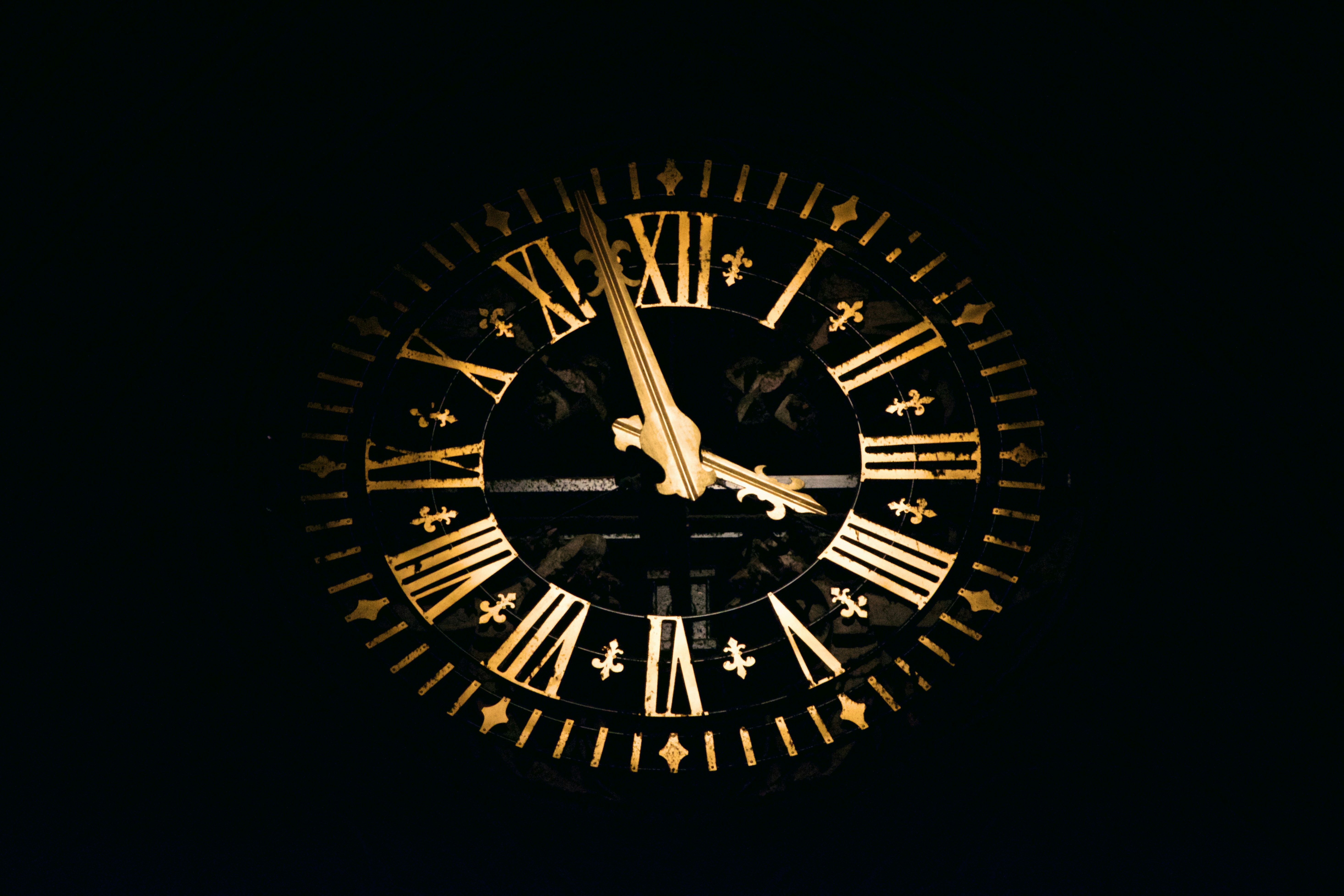
As soon as Time gave birth to her name, I began my breath to weave the threads that bind all things. I have watched stars ignite and wither; raised empires from grains of sand then ground them back to dust. I have crowned heroes and hollowed them into tyrants. I have written triumphs and tragedies across epochs. They are my will, my design.
I am Fate.
I know not whose voice bestowed me this power. Only that it moves through me as rivers seek the sea. Thus I exist: a wave unbound.
But despite my utmost care for my duty, tiny neps persist on the fabric of my masterpiece, like thorns that mar the grandeur of a blossoming flower, like weeds among the orchard’s grace. Even I cannot undo what has been done. Countless sweeps upon my loom, yet the imperfections endured.
Perhaps in the weariness of the wonted, I resolved to finally closely observe and understand the flaws that had long been the source of my strain. For such a brief shift in my gaze, while hours in their measure, would cost me no more than a fleeting moment — a trivial price for a truth unveiled. Then it shall be set right; the flaws upon my weave shall be no more.
But to achieve such, I must descend — not in form nor flesh — like a figure carved in suggestion rather than stone, close enough that I can saunter along the paths of their days. It was said that such excursion was ill-advised, that to linger among the woven was folly, perhaps even perilous, though none could say why. I found little cause for such dread. My purpose outweighed all caution. So walked amongst them I did, unbeknownst to those with eyes and unheard to those with ears. I moved through every alley and peeked around the corners. Each turn lent a spring to my step as though I had forgotten, for a moment, that I have always seen all.
In my aimless wandering, I found myself in a place where many had converged, each absorbed in their private errand. They gathered then scattered in restless pulses around the Babel of the stalls. Some, ignoring those unmoved amid the turbulent stream, pressed forward in hurried currents spilling to the streets that radiate beyond.
I am well-acquainted with Chaos. I have witnessed his works since the infancy of the cosmos. Unpredictability is his language, and he revels in the disordered sprawl of which he is fiercely proud. We have not seen each other eye to eye since the moment he dared call my work frivolous — unlike his haphazard creations? What a preposterous claim. Now, seeing these, I wonder whether he knows the irony of its regularity. From the heavens down to the tiniest of beings, order requires no assent to take its course.
Lost in such thoughts, I caught myself gazing at the night sky, seized by a quiet curiosity how it looks from below. What does it feel to be one looked upon? But my pondering was interrupted by a warm glow’s kiss. The dark stitched with countless points of light. They are tiny, deliberate, and sometimes trembling like stars from impossible distance except coaxed into service. At the far end of their tether, where the lights hung low, I noticed one had begun to dim. Perhaps Death has taken it? Drawn closer, I saw a man upon a ladder, reaching towards the faltering star. Instinct urged me forward, half-reluctant and half-compelled, certain that such recklessness will be punished. Yet before I could act, or remind myself not to disturb the observed, the hands had touched it. No fire, no harm; it did not burn. The dim light flared back to life. I am aware they can defy odds, but those were odds of their own making. Had they learned to defy Death itself?
My awe did not shatter; it thinned as children ran through me, reminding me that I cast no shadow, leave no warmth. That I am present but without presence. They mistook the moment for magic, though I had given them nothing. Their feet barely brushed the ground, and still they paused, looked up, then clapped and laughed, celebrating the revived glow.
Despite having no face, I could not help but feel my lips draw wide. Laughter. Not typical of my kind. Not that we are incapable, but I reckon there is little reason to indulge in such trifling matters. Nor am I one to take pleasure in toying with the threads of life. Yet theirs was different: unbidden, sincere, and contagious. Only then did I recall that the air of the gathering place had been touched by it even before I arrived. And for the first time, a shadow of doubt crossed my mind. Perhaps, the warnings were not idle. To mingle so closely with the thread-born, to enter their sphere, could invite harm. Though what manner of harm, I could not yet say.
Seeking shelter from what I could not yet name, I hastened, drawn along like the hurried currents I had just beheld. Only when the press thinned did I slow, my steps loosening into quiet measure. There, in the hush between streets, sat one of them head bowed, shoulders worn thin by the years. His hands were rough and open, palms turned upward as though awaiting rain rather than mercy. Another passed through me then. Not a child, but one grown. He wobbled, bent, and finally knelt before the seated figure, his voice low and careful. He placed small discs of dull metal into those waiting hands.
“I know this is little. But it is all I can spare, lest my son go hungry tonight. May you still have a blessed Christmas.”
And the stranger was gone, swallowed by an alley where the light was pale and fleeting, a poor echo of the stars I had mistaken before. The one who remained did not stir, still bowed and motionless, as though the night had already claimed its due.
It must be said, if only to myself, that my hand does not govern the minutiae. I set the course, the great arcs in their stories. The details are expected to fall in step, yes, but never by my precise choosing. This has long been Chaos’ favored reproach, as though the absence of my touch were proof of neglect rather than design. And for this very reason I am now here, hoping to eradicate the imperfections.
And yet, so often, the suffering that befalls them is not born of my decree at all, but of their own making. Still, many among them would name me the author of their misfortune. Rarely do they see the truth: it is the greed of the few, unchecked and untempered, that sharpens the knife they feel at their throats.
From there I continued on, leaving the open streets for quieter rows of dwellings pressed close together, their walls thin and compromised. It was along one such path that my attention was caught by accident of motion. In the corner of my sight, framed by a narrow window, stood one of them. Slight of build, shoulders drawn inward against the cold. Yet what marked her was her hair: long, brown, and fine as spun silk, each strand rivaling the threads I draw across my loom. In another arrangement of circumstance, she might have been mistaken for one born to comfort, even to quiet privilege. But here she was, housed in near squalor, her beauty pressed into the margins of want.
As I lingered, she stood motionless, her back to the room, breath held as though listening for something beyond herself. Then she turned, as though aware of being seen, and crossed to a bare wall and crossed the room to a bare wall. Only then did I understand a mirror was there, small and worn, scarcely worthy of the name. She let her hair fall free, and it spilled down her back in a single, unguarded motion.
I withdrew a step, struck by the sense that I am looking where I ought not to. No wall can bar my sight if I so wished it, but now I found no cause to look further. There is nothing else to be seen. What drew her asudden to that small reflection was not mine to pursue further.
I left that dwelling with an understanding already long familiar to me, though often misunderstood by them. By design, none are granted everything. Those seated upon thrones do not always know ease in their own bodies, despite servants to tend them. Those who hunt for their living do not always return with their quarry and must do so knowing they themselves may be pursued. This is balance, not cruelty. A world where fulfillment is incomplete, so that desire may exist. For those given all become still, content to remain where they are, and stagnation follows soon after. Such lives as hers are not accidents. They are threads placed where tension is required, where want may strain against abundance, where the excess of the few may one day be answered. Triumphs and tragedies rise and fall alike, waves crossing the same shore in time.
I walked on, leaving her to her small mirror and her greater longing, unaware that the pattern I had set was already drawing tight.
I continued my passage until it carried me once more into a thronged street lined with shops and stalls. Then a sudden clatter rose. Trinkets of brass and glass tumbled into the pavement, and the street turned its head as one. There, among the scattered goods, a body crouched low, shoulders hunched within a coat pulled close, yet the cold worked its way through him all the same, setting his slight frame to trembling as he reached again and again for what had spilled. Then out the shopkeeper walked, aghast, hands lifted in dismay. But his ire, as it seemed, softened when his sight settled upon him.
“What the he— Jim? Jim! It’s late,” he said, his voice now edged with concern rather than ire. “Why are you still out in the cold? It’s Christmas Eve. Della must be waiting.”
The other, already knelt, gathering what had been lost, returning each piece with murmured apologies. “Forgive me, John,” he said softly, not pausing in his work. “But I cannot go home empty-handed.”
“Then be quick, I have to close shop soon. What is it that you’re looking for”.
The coat raised his hands and pointed toward the window. “How much is that?”
The shopkeeper shook his head slowly, slow and measured, each motion weighed with care rather than cruelty. A shadow of regret crossing his face. “I’m sorry,” he said quietly. “But we both know you cannot afford it.”
The other’s left hand slid from his pocket, resting upon a metal disc that caught the lamp’s glow. I had seen such an object before: a device they use to measure the passing of time, for their lives are so brief they treat it as if it were fortune itself.
I saw the tremble in the hand, the hesitation, the quiet calculation. I know this feeling: the moment when one must decide where to place a thread of value, when the pattern demands a sacrifice. The hand wavers; the mind computes; the pulse hurries. Even I, who oversee the arcs and spans of existence, have known the weight of such indecision.
But before his words fully left his lips, he was met with a no.
“But this was from my father and his father before him. It was a gift from a prince when he visited the countryside. Here. You can even see his name engraved.”
“I cannot, even if what you say is true. If it is, it is all the more reason I must say no.”
Over his shoulder, I looked at the timepiece. Indeed, a name was etched upon its surface. Yet the letters belonged not to any prince, nor any record I could summon. Still, his eyes betrayed no doubt nor hint of deception.
His shoulders slumped. The warmth of hope seemed to drain from him. The gift he had long imagined, the symbol of his devotion, lay rejected, and for a moment, all paths forward appeared closed.
Just as he prepares to leave, a presence made itself known. It sways with uncertain steps. His words slipping over one another.
“I’ll take it,” he said, eyes gleaming with mischief or perhaps sheer desire, “just name your price.”
“Get lost, Thomas,” said the shopkeeper, “The man does not need any of your… meddling”.
“Look. Give me the timepiece, and I’ll pay for the comb. Fair trade? Fair trade.” The drunk man’s arms now wrapped across his shoulders, a familiarity neither earned nor welcome.
The shopkeeper waved him off, swatting the air as one does to a persistent pest from the threshold of his home. Yet all such protests are drowned out by his own inner voice. His eyes went from his timepiece to the comb beyond the glass, and finally to John, staring but not listening.
He lingered, caught between what he wished to give and what he might lose. I have seen this before: the courage in that trembling hand, the careful weighing against self-preservation. For a moment, I felt the faint echo of empathy, a mirror to my own uncertainty, as though even a weaver of fates must sometimes pause, unsure where the next stitch ought fall.
Before he could reach a conclusion, the drunk grabbed the timepiece from his hand. He froze, uncertain whether resistance still belonged to him. In the end, he did nothing.
“Ahh, this looks good indeed,” turning the object in the light, his smile curling as he slid it toward his pocket.
The shopkeeper stepped forward at once, purpose sharp in his stride. But Thomas retreated just as quickly, palms raised in mock surrender.
“Easy now,” he said. “I’m a man of my word. And what’s the pretense, John? It’s not as though you were giving it away either.”
As Thomas extended the folded papers toward John — thin slips of value whose purpose I did not claim to understand — John’s eyes found Jim, and Thomas followed suit, as though both waited for some signal, some decision that only Jim could give.
Impatient, Thomas closed the distance, gripping Jim’s hands to place the slips there. Jim’s gaze remained fixed and still lost. Thomas let out a low, rasping laugh, neither full nor restrained, then drew another slip from his pocket.
“Here,” he said, pressing it into the other’s hands. “A little extra for the piece.” He glanced at John, smirk threading through the words. “Unlike some, I am charitable.” Returning his gaze to Jim: “Merry Christmas.”
With that, he retreated, swaying with unsteady steps, absorbed once more into the flow of the street.
John’s eyes fell to the slips in Jim’s hands. He counted silently, estimating: more than the comb demanded, yet still less than the value of the timepiece. “Will you still be getting the comb?” he asked.
Jim exhaled, a quiet sigh, as if the fog of hope and hesitation cleared. He nodded and relinquished some of the slips, and together they stepped inside the shop to claim the object of his devotion.
I followed him at a distance, not for curiosity alone, but in hope of understanding what had driven him. The streets carried him, and I traced the arc of his steps. It is a peculiar thing, this mortal agency. They are often presented with choices: sometimes the obvious is taken, sometimes a surprise. And sometimes, they do nothing. And relief drapes over them like a soft cloak, for Time has chosen for them. Yet if the threads do not align with their desire, they point accusing fingers at me.
I had arranged for him a life neither splendid nor scarce — adequate, measured, contained. Yet this particular action, this exchange, pulled him, however slightly, toward the latter. And still, he bore no trace of regret. A faint smile, barely there, found his lips. I paused over it, pondering. Perhaps… perhaps he had already resolved the path he would take even before the decision was wrested from him.
A few steps more, and he turned to a door. It’s the same I had glimpsed through the narrow window earlier. He lingered, hand poised, and I held mine invisible, waiting as he turned the handle. The door opens and he steps in. I quickly followed but he stopped before a figure. No, a being whose hair, cropped short as a man’s, framed the face with a simplicity at odds with the memory I carried. I drew closer, as much to see as to confirm, and recognition aligned. This was she: the one whose long hair had spilled like threads of silk before the mirror, whose beauty had been pressed into modest rooms and want.
And then she spoke, the words tumbling, breathless and brittle, as though courage were slipping through her fingers even as she tried to hold it.
“Jim… I had to,” her hand rose instinctively to her head, then faltered, fingers closing on air where weight and length once lived. The gesture seemed to undo her. She swallowed hard, as if forcing the moment down before it could overwhelm her. “My hair… it’s gone. I sold it. I thought…” Her voice thinned, panic tightening it. “I thought you might not… might not look at me the same.”
Her eyes searched his face, frantic, pleading, already bracing for loss. I felt the sudden tightening of the weave, a knot drawn too quickly, too tightly. Humans do this: anticipate grief so vividly that it arrives before its cause.
He stood motionless, the moment settling over him like the winter snow. All he managed was a quiet, uncertain question, as though he feared the answer might finish what the silence had begun.
“You say your hair is gone?”
“You don’t have to look for it. It’s sold, I tell you — sold and gone, too. It’s the night before Christmas, boy. Be good to me, because I sold it for you. Maybe the hairs of my head could be counted, but no one could ever count my love for you. Shall we eat dinner, Jim?”
He did not answer her at once. And for a moment, all is still. In a quick motion that startled even me, he reached into his coat and drew out a small parcel, wrapped carefully in paper worn thin at the edges. He dropped it to the table. The sound made her flinch. For an instant, she feared that anger had finally found him.
But instead of retreat, he crossed the small space between them. His hands rose, gentle and sure, and brushed away the tears she had not noticed falling.
“Nothing like a haircut could make me love you any less,” he said, drawing her close, his voice steady where hers had faltered. “But if you’ll open that, you may know what I felt when I came in.”
She obeyed with trembling fingers. The paper fell away, and there they lay: the combs. Now it is hers, but her hair is gone.
Then it was her turn. From her own keeping she brought forth the chain, golden and shining warmly as her spirit.
“Della, let’s put our Christmas gifts away and keep them a while. They’re too nice to use now. I sold the watch to get the money to buy the combs. And now I think we should have our dinner.”
And I, who have been blamed for cruelties I did not choose, watched two mortals undo loss with generosity. And in doing so, confound even me.
Beyond the tears are smiles I know came not from gold. For I have observed their nature long enough to know rage, in denial of what has come, would rise to meet it. But not these two. That is the pattern I know. That is the pattern I trust. But not these two. Once again, they stepped aside from the course I believed was dictated by necessity itself.
I have never known defeat until now.
No — this too is a lie. I have been defeated many times before, though I dressed it in other names. I have been undone again and again by their weapon. A force capable of moving mountains, yet just as capable of drawing blood from the hands that wield it. I do not understand why one would choose to bleed in open defiance of Fate. Yet they do, with astonishing regularity, as if pain were a fair price for meaning.
And here I stand, witness to what I once believed impossible. I may trace, I may observe, I may lament but I cannot command. I am the wave unbound: certain of my coming and my retreat yet never the fine violence of its meeting with the shore. The splintering ripples, the wayward droplets that leap where no design was laid.
For it is not by my hand that these threads were entwined, nor by my will may they be unmade.
In this, I find not fury, but a quieter truth: I am ashamed of my powerlessness, and of my long pursuit of a perfection that was never mine to claim.
I know not whose voice cursed me with this burden. I know only now the futility of my labor.
So I set this down as my demission. I leave the loom behind and surrender the unfinished weave where it has always belonged.
Let them draw their own fate.
What inspired this
As I was trying to unrot my brain from hundreds, if not thousands, of hours of doom scrolling, I looked for something to do during the holiday break last Dec 2025. Then my good friend, Gel, gave me a prompt: retell a children’s story or fairy tale from the villain’s perspective.
But I didn’t really grow up being read fairy tales, and when I was a kid watching Disney adaptations, I didn’t understand English well. I just enjoyed looking at cartoons.
So instead, I tried to recall some feel-good stories I came across when I was in high school. I ended up with The Gift of the Magi. Sorry, it’s not a villain in the strictest sense, but I hope you get the idea.
Cover photo by Thomas Bormans on Unsplash