Drowning in The Shallows
I had an unconventional high school teacher who handled our Social Studies and Economics classes. “Unconventional,” however, might be more generous than accurate.
Looking back, I don’t think he had any business teaching either subject. That may sound harsh, but I suspect many of my former classmates would agree. I hope I’m wrong, yet I don’t believe he possessed the credentials, knowledge, or experience the role demanded.
As far as I knew, he had worked as a journalist, though even that became increasingly difficult to believe the more I read and see what journalism actually entails. He was also said to have worked in radio. I wasn’t familiar with any of the programs he had supposedly been part of, but the claim seemed plausible when an old colleague, who apparently kept in touch with him, gave our class a shoutout during an early morning broadcast.
His credentials aside, the stories he told in class, despite having little to do with the lesson, were genuinely interesting, at least the first time around. Unfortunately, he had a habit of repeating them for weeks, sometimes months, until even the most engaging anecdotes lost their charm.
Perhaps that is precisely why some of them have stayed with me. It is an odd thing to admit, considering he is hardly the kind of educator I would have expected to leave a lasting impression. Yet one remark, in particular, endured. It was not originally his, but I heard it from him first:
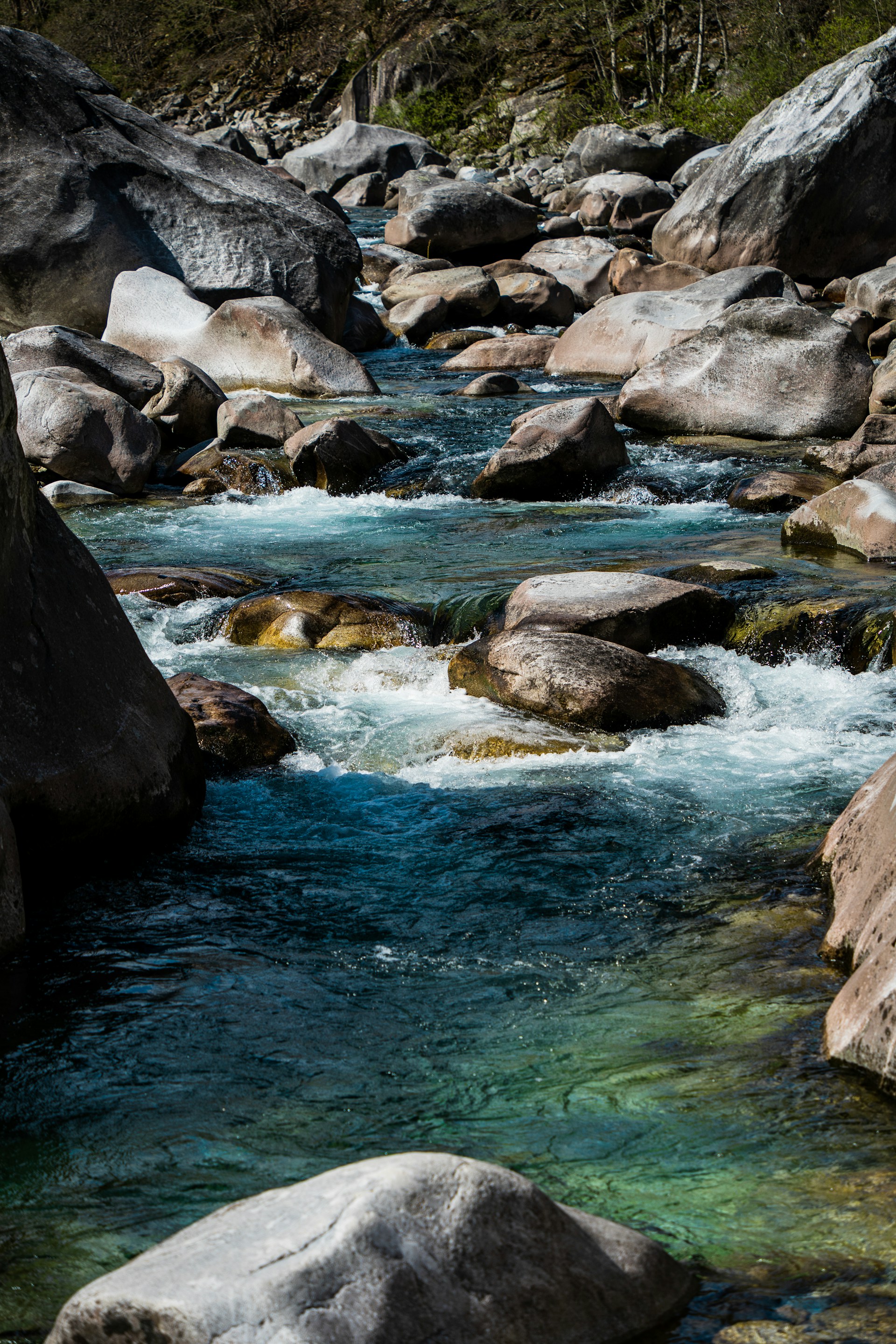
“Silent water runs deep.”
He would often say this while encouraging the class to participate in discussions. Many of our lessons began not with the textbook, but with a conversation about current events. He would ask us what we thought, inviting us to share our opinions before the lecture could even begin.
To be fair, I appreciated that. I’ve always enjoyed discussions that wander beyond the confines of a book. Some of the most memorable lessons I’ve had came from conversations that weren’t strictly part of the curriculum.
With him, however, it often swung too far in the opposite direction. More often than not, it felt as though he was improvising the class rather than teaching it. Looking back, I struggle to recall anything from Economics beyond repeated references to Maslow’s Hierarchy of Needs. Or that time he spent several minutes entertaining a classmate’s question about where FHM, an adult men’s magazine, fit within Maslow’s hierarchy. Heck, it even became part of the test. Ironically, it was the digressions, not the lessons themselves, that I remember most.
Now, back to that quote…
He would often bring it up while encouraging the class to participate in discussions, but never to affirm it. Rather, he invoked it as an outdated piece of wisdom, one he no longer believed. “Have you heard the saying, ‘Silent water runs deep’?” he would ask. “I don’t believe that anymore.”
More often than not, what followed carried a faint sting of a critique. I always suspected it was directed not at the class as a whole, but at one particular boy. I could never be certain, of course. It was simply the impression I got whenever he slowly walked down the aisle, lingered near that classmate’s desk, or seemed to let his gaze settle in his direction as he dismantled the proverb.
That boy happened to be at the top of our class. To this day, I still consider him one of the brightest minds I have ever met.
My teacher’s argument was straightforward: if someone were truly knowledgeable, they would not remain silent. They would have the confidence to speak, to contribute, and to defend their ideas. Silence, he believed, was more often than not an admission of ignorance.
At the time, and even now, I think there is some truth to that. Many people, myself included, have stayed quiet for fear of being wrong. As the oft-quoted saying goes, “Better to remain silent and be thought a fool than to speak and remove all doubt.”
All of these memories came rushing back after I found myself reading one social media post after another, each carrying another snippet of a senator’s rather colorful contributions during legislative sessions. The kind of remarks that make one raise an eyebrow, not in admiration of wit or insight, but at yet another unremarkable display of incompetence. An incompetence that our institutions and, by extension, we ourselves have too often tolerated.
Perhaps the person occupying that seat is not the root of the problem, but its consequence. The symptom of something far deeper: a failure of education.
When education is reduced to little more than a means of securing a paycheck, it inevitably loses sight of its higher purpose. We teach people how to earn a living, but far less often how to think, how to question, or how to distinguish conviction from competence. Intellectual curiosity becomes a luxury reserved for those with the time to indulge it, while meaningful public discourse struggles to compete with the immediate demands of making ends meet.
Into that vacuum steps spectacle. Popularity eclipses merit. Confidence is mistaken for competence. We smart-shame those who ask difficult questions, celebrate those who offer easy answers, and gradually cultivate a culture where appearance of certainty is rewarded more than depth of thought.
Perhaps this essay is no different. Perhaps it, too, is an exercise in futility. I almost chose not to write this at all because I doubted it would matter. The people who would nod along are unlikely to be the ones who most need to hear it, while those who do may never read it at all. There is an uncomfortable irony in writing about the failure of public discourse from behind the comfort of a screen. It feels, at times, almost performative. As though I were mistaking my observation for action, criticism for contribution.
But maybe, that is how silence begins. Not always in ignorance, but in quiet suspicion that thoughtful words no longer carry any weight. In a society where intellect is ridiculed, and foolishness applauded, I would not be surprised if many have resigned themselves to silence.
So no, sir. Silent water still runs deep. But even the deepest rivers cannot be heard above the applause for the shallow.
Cover photo by Damien Schnorhk on Unsplash